Pooch & Mutt Joint Care Salmon vs Skinner's Field & Trial Adult
Ad: we earn a commission if you buy through links on this page. It never affects our scores or rankings. How we make money
Side-by-side comparison of scores, ingredients, prices and real customer feedback for Pooch & Mutt Joint Care Salmon and Skinner's Field & Trial Adult.
Last verified: 25 Jun 2026 · Based on 25 reviews
Pooch & Mutt Joint Care Salmon scores 75.0/100 vs Skinner's Field & Trial Adult at 74.0/100. Pooch & Mutt Joint Care Salmon wins on ingredient quality, palatability. Skinner's Field & Trial Adult is stronger on nutritional value and value for money.
How Do the Scores Compare?
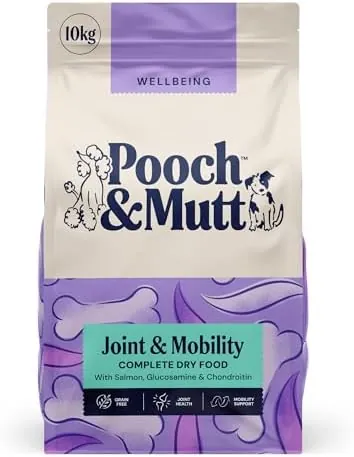
Joint Care Complete Dry Dog...
Pooch & Mutt
|
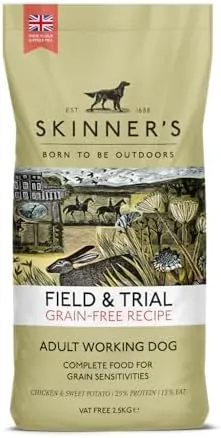
Skinner's Field & Trial Com...
Skinners
|
|
|---|---|---|
| Overall Score | 75.0 | 74.0 |
| Ingredient Quality |
78.0/100
Best
|
74.0/100 |
| Nutritional Value | 72.0/100 |
75.0/100
Best
|
| Value for Money | 62.0/100 |
68.0/100
Best
|
| Transparency | 68.0/100 |
76.0/100
Best
|
| Palatability |
92.0/100
Best
|
86.0/100 |
| Best Price | £59.99 Amazon UK → |
£13.95
Amazon UK →
Cheapest
|
| Form | N/A | N/A |
| Dose | N/A | N/A |
| Third-Party Tested | ✗ No | ✗ No |
| Reviews Analysed | 13 | 12 |
Joint Care Complete Dry Dog Food...
Pros
- ✓Named fresh salmon as primary protein — no generic meat derivatives or by-products
- ✓Functional joint ingredients: Green Lipped Mussel, Glucosamine, Chondroitin, and Linseed are all evidence-supported
- ✓Exceptionally high palatability — fussy eaters accepted it, dogs consistently empty bowls
- ✓Grain-free and poultry-free — suitable for dogs with grain or poultry sensitivities
Cons
- ✗Premium price point — 10kg bag considered expensive by some owners relative to competitors
- ✗Fresh salmon labeling (50% fresh weight) is misleading compared to dry-matter reality (~15–17%); ingredient wheel correctly shows ~25% meat
- ✗Protein at 22% is on the lower end for very active or heavily muscled senior dogs
- ✗Limited independent third-party certification or feeding trial data publicly stated
Best For
Skinner's Field & Trial Complete...
Pros
- ✓Named protein leads the recipe — poultry meat meal at 30%, declared minimum 95% chicken, no by-products
- ✓Several reviewers with sensitive or allergy-prone dogs report reduced flare-ups and firmer, less frequent stools
- ✓Strong palatability: fussy eaters described leaving a clean bowl and eating enthusiastically
- ✓Added joint support (glucosamine 350mg/kg, chondroitin 150mg/kg) and prebiotics (MOS, FOS) at clearly stated doses
Cons
- ✗Multiple recent reviews flag steep price increases, one saying it was over £20 dearer than elsewhere
- ✗Protein comes from meat meal rather than fresh named chicken, placing it mid-range rather than premium
- ✗Two carbohydrate sources (sweet potato chips plus potato flake) make starch a large share of the recipe
- ✗Brewer's yeast can be a trigger for a minority of yeast-sensitive dogs
Best For
Score Breakdown: Pooch & Mutt Joint Care Salmon vs Skinner's Field & Trial Adult
Pooch & Mutt Joint Care uses fresh salmon as its primary named protein — a high-quality, omega-3-rich source well suited to joint and inflammatory support — supplemented by functional ingredients including Green Lipped Mussel, Glucosamine, Chondroitin, and Linseed, which represent a genuinely evidence-backed joint health stack.
What are the key differences?
Frequently Asked Questions
Which is better, Pooch & Mutt Joint Care Salmon or Skinner's Field & Trial Adult? ▼
Is Pooch & Mutt Joint Care Salmon worth the price compared to Skinner's Field & Trial Adult? ▼
Which has fewer side effects? ▼
Related Product Comparisons
Complete Natural Adult Dog Food Wet (10 x 150g Trays)
vs Joint Care Complete Dry Dog Food Grain Free (Regular Sized Kibble), for Mobility Support and Joint Aid, Salmon and Sweet Potato, 10kg
Complete Natural Adult Dog Food Wet (10 x 150g Trays)
vs Skinner's Field & Trial Complete Dry Grain Free Adult Dog Food Chicken and Sweet Potato, 2.5 kg
Lily's Kitchen Made with Natural Ingredients Adult Small Breed Dry Dog Food Chicken & Duck Grain-Free Recipe 2.5kg
vs Joint Care Complete Dry Dog Food Grain Free (Regular Sized Kibble), for Mobility Support and Joint Aid, Salmon and Sweet Potato, 10kg
Lily's Kitchen Made with Natural Ingredients Adult Small Breed Dry Dog Food Chicken & Duck Grain-Free Recipe 2.5kg
vs Skinner's Field & Trial Complete Dry Grain Free Adult Dog Food Chicken and Sweet Potato, 2.5 kg
Lily's Kitchen Natural Adult Wet Dog Food Tray Cottage Pie Grain-Free Recipe 10 x 150g
vs Joint Care Complete Dry Dog Food Grain Free (Regular Sized Kibble), for Mobility Support and Joint Aid, Salmon and Sweet Potato, 10kg
Lily's Kitchen Natural Adult Wet Dog Food Tray Cottage Pie Grain-Free Recipe 10 x 150g
vs Skinner's Field & Trial Complete Dry Grain Free Adult Dog Food Chicken and Sweet Potato, 2.5 kg
What the Data Says
Is grain-free dog food actually better? What the data shows.
Grain-free leads on every metric, but the gap is smaller than marketing suggests. We scored 27 grain-free and 73 standard dry dog foods across the same criteria.
The numbers: grain-free averages 75.1/100 overall versus 71.5 for standard — a 3.6-point lead. Break it down by category and the picture gets more interesting.
Ingredient quality is where grain-free pulls ahead most: 77.8 versus 71.2, a 6.6-point gap. Grain-free brands tend to use higher meat content and fewer cheap bulking agents. Transparency is the second-largest gap: 74.9 versus 69.8 (5.1 points) — grain-free brands are generally more upfront about sourcing and ingredient percentages.
But nutritional value tells a different story: 72.1 versus 70.0, just 2.1 points apart. That's the smallest gap of any metric. Removing grains doesn't automatically make a food more nutritious.
Bottom line: if your dog has a diagnosed grain intolerance, grain-free is the right call. If not, a high-scoring standard food delivers nearly identical nutrition at a lower price point.
Do grain-free dog foods hide carbohydrate fillers?
Grain-free scores better on transparency (74.9 vs 69.8), but grain-free does not mean low-carb. That 5.1-point transparency gap across 27 grain-free and 73 standard products means grain-free brands are more likely to disclose ingredient percentages and sourcing details.
The catch: most grain-free formulas replace rice, wheat, or corn with peas, lentils, chickpeas, or sweet potato. These are still carbohydrate sources. Some grain-free products list two or three legume variants in the first five ingredients, pushing total carbohydrate content to 40-50% of the formula.
Here's how to check: read the analytical constituents on the back of the bag. If protein is 25% and fat is 15%, the remaining 60% is mostly carbohydrates, moisture, and fibre. That's true whether the carbs come from brown rice or sweet potato.
The grain-free label tells you what's absent, not what replaced it. Higher transparency scores mean these brands make it easier for you to verify the substitution yourself — but you still need to look.
Disclaimer: AIScored provides data-driven comparisons based on publicly available reviews. This is not medical advice. Affiliate links may earn us a commission at no extra cost to you.
Feedback & Suggestions
Spotted an issue? Wrong price, incorrect data, or something else off? Let us know and we'll fix it.
Missing a product you'd like us to review? Tell us the product name and we'll consider adding it.