Indeed Labs Retinol Reface Moisturizer vs The Ordinary Retinol 0.5% Squalane
Ad: we earn a commission if you buy through links on this page. It never affects our scores or rankings. How we make money
Side-by-side comparison of scores, ingredients, prices and real customer feedback for Indeed Labs Retinol Reface Moisturizer and The Ordinary Retinol 0.5% Squalane.
Last verified: 01 Mar 2026 · Based on 24 reviews
Indeed Labs Retinol Reface Moisturizer scores 75.0/100 vs The Ordinary Retinol 0.5% Squalane at 74.0/100. Indeed Labs Retinol Reface Moisturizer wins on effectiveness, skin compatibility, texture experience. The Ordinary Retinol 0.5% Squalane is stronger on ingredient quality and value for money.
How Do the Scores Compare?
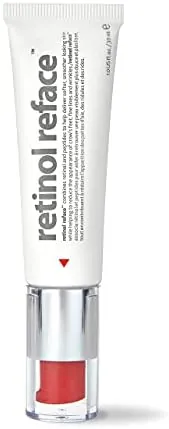
Indeed Labs Retinol Reface ...
INDEED
|
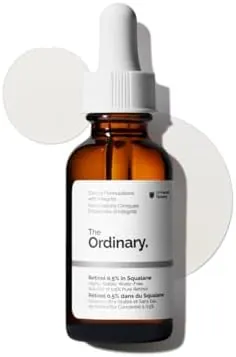
The Ordinary Retinol 0.5% i...
The Ordinary
|
|
|---|---|---|
| Overall Score | 75.0 | 74.0 |
| Effectiveness |
80.0/100
Best
|
75.0/100 |
| Ingredient Quality | 74.0/100 |
84.0/100
Best
|
| Skin Compatibility |
68.0/100
Best
|
60.0/100 |
| Texture & UX |
70.0/100
Best
|
57.0/100 |
| Value for Money | 82.0/100 |
92.0/100
Best
|
| Best Price |
£21.44
£20.67
Amazon UK →
-4% deal
|
£8.40
£7.14
Amazon UK →
-15% deal
|
| Form | N/A | N/A |
| Dose | N/A | N/A |
| Third-Party Tested | ✗ No | ✗ No |
| Reviews Analysed | 13 | 11 |
Indeed Labs Retinol Reface Moist...
Pros
- ✓Retinol + bakuchiol combination provides complementary anti-aging action with potentially lower irritation than retinol alone
- ✓Consistent user reports of fine-line reduction and improved skin texture within weeks to months of use
- ✓Effective for acne-prone skin — one long-term user (4 months) reported complete clearance including post-acne scarring
- ✓Generally well-tolerated even on self-described sensitive skin when used correctly
Cons
- ✗Thick cream texture does not fully absorb for some users, leaving a slight residue — may not suit oily skin daytime use
- ✗Packaging design requires manipulation to dispense product, suggesting potential air exposure and oxidation risk for the retinol
- ✗At least one verified severe allergic reaction (required cortisone and antihistamines) in a self-described non-sensitive user — idiosyncratic but notable
- ✗No INCI list disclosed in the listing, making full formulation safety assessment (comedogenicity, fragrance, preservatives) impossible without checking the physical packaging
Best For
The Ordinary Retinol 0.5% in Squ...
Pros
- ✓Exceptional value for money — one of the most affordable 0.5% retinol serums on the market
- ✓Extremely minimal, clean INCI — no fragrance, no alcohol, no unnecessary fillers or sensitisers
- ✓Squalane base provides meaningful moisture occlusion; many users skip separate moisturiser entirely
- ✓Effective for hyperpigmentation, post-acne scarring, and overall skin texture with consistent use
Cons
- ✗0.5% is an intermediate strength — not appropriate for retinol beginners; 0.2% recommended first
- ✗Oily, greasy texture from squalane base is poorly tolerated by oily and acne-prone skin types
- ✗Retinol burn risk at skin folds (neck, eye corners) if too much product pools during sleep
- ✗Anti-aging results for fine lines require 3–6 months of consistent use — slow payoff
Best For
Score Breakdown: Indeed Labs Retinol Reface Moisturizer vs The Ordinary Retinol 0.5% Squalane
Indeed Labs Retinol Reface combines encapsulated slow-release retinol with bakuchiol, a plant-derived compound that activates similar signalling pathways to vitamin A but with a gentler profile — the dual-mechanism approach is well-supported by dermatological literature.
What are the key differences?
Frequently Asked Questions
Which is better, Indeed Labs Retinol Reface Moisturizer or The Ordinary Retinol 0.5% Squalane? ▼
Is Indeed Labs Retinol Reface Moisturizer worth the price compared to The Ordinary Retinol 0.5% Squalane? ▼
Related Product Comparisons
Naturium Retinaldehyde Cream Serum 0.05%, Advanced Anti-Ageing & Smoothing Face & Skin Care
vs Indeed Labs Retinol Reface Moisturizer Cream For Face/neck, Wrinkle Repair Moisturizer - softer, Smoother, Younger Skin- Vitamin A & Bakuchiol For Wrinkles/lines/acne/aging
Naturium Retinaldehyde Cream Serum 0.05%, Advanced Anti-Ageing & Smoothing Face & Skin Care
vs The Ordinary Retinol 0.5% in Squalane, Intermediate Retinol Serum for the Face That Is Anti-Aging and Skin Smoothing, 30ml
Medik8 Crystal Retinal 3 - Age-Defying Night Serum - Improves Wrinkles & Skin Firmness- 0.03% Retinal Strength - 11x Faster than Retinol - For New Vitamin A Users - 30ml
vs Indeed Labs Retinol Reface Moisturizer Cream For Face/neck, Wrinkle Repair Moisturizer - softer, Smoother, Younger Skin- Vitamin A & Bakuchiol For Wrinkles/lines/acne/aging
Medik8 Crystal Retinal 3 - Age-Defying Night Serum - Improves Wrinkles & Skin Firmness- 0.03% Retinal Strength - 11x Faster than Retinol - For New Vitamin A Users - 30ml
vs The Ordinary Retinol 0.5% in Squalane, Intermediate Retinol Serum for the Face That Is Anti-Aging and Skin Smoothing, 30ml
The Ordinary Granactive Retinoid 2% Emulsion, Advanced Retinoid Alternative for Anti-Aging and Skin Texture Improvement, 30ml
vs Indeed Labs Retinol Reface Moisturizer Cream For Face/neck, Wrinkle Repair Moisturizer - softer, Smoother, Younger Skin- Vitamin A & Bakuchiol For Wrinkles/lines/acne/aging
The Ordinary Granactive Retinoid 2% Emulsion, Advanced Retinoid Alternative for Anti-Aging and Skin Texture Improvement, 30ml
vs The Ordinary Retinol 0.5% in Squalane, Intermediate Retinol Serum for the Face That Is Anti-Aging and Skin Smoothing, 30ml
What the Data Says
Retinol vs retinaldehyde: which actually scores higher?
Retinaldehyde leads by 17.2 points on effectiveness. Across 42 retinol/retinoid products we scored, the 3 retinaldehyde products average 78.3 on effectiveness versus 61.1 for 31 retinol products.
The retinaldehyde products in our database:
- Naturium Retinaldehyde Cream Serum 0.05% — 80 effectiveness, 83 overall
- Paula's Choice CLINICAL Pro Retinaldehyde — 74 effectiveness, 64 overall
- Medik8 Crystal Retinal 3 — 81 effectiveness, 79 overall (uses retinaldehyde despite the name)
All three beat the retinol average on effectiveness. The biological reason: retinaldehyde sits one conversion step closer to retinoic acid, the form your skin actually uses. Retinol requires two conversions; retinaldehyde requires one.
The honest caveat: 3 products is a small sample. The gap is wide enough to take seriously, but we'd want more retinaldehyde products on the market before calling it definitive. For now, the data favours retinaldehyde — but your options are limited.
Why do most retinol products score below average?
31 retinol products average 61.1 on effectiveness. Most land in mediocre territory. The molecule works — but the average product doesn't deliver it well.
The top retinol performers prove it can be done right:
- Paula's Choice CLINICAL 1% Retinol — 82 effectiveness, 76 overall
- Indeed Labs Retinol Reface — 80 effectiveness, 75 overall
- The Ordinary Retinol 0.5% in Squalane — 75 effectiveness, 74 overall
Three factors separate winners from the rest:
- Concentration. Products with clearly stated, meaningful percentages (0.5%–1%) score higher. Many products list retinol without disclosing how much.
- Stability. Retinol degrades with light and air exposure. Good packaging (airless pumps, opaque tubes) and encapsulation technology keep the molecule intact.
- Supporting ingredients. Top scorers pair retinol with stabilisers, squalane, or delivery systems that protect it until it reaches your skin.
The average retinol product fails on one or more of these. A retinol label doesn't guarantee results — the formulation behind it determines whether you're getting active retinol or degraded filler.
Disclaimer: AIScored provides data-driven comparisons based on publicly available reviews. This is not medical advice. Affiliate links may earn us a commission at no extra cost to you.
Feedback & Suggestions
Spotted an issue? Wrong price, incorrect data, or something else off? Let us know and we'll fix it.
Missing a product you'd like us to review? Tell us the product name and we'll consider adding it.